
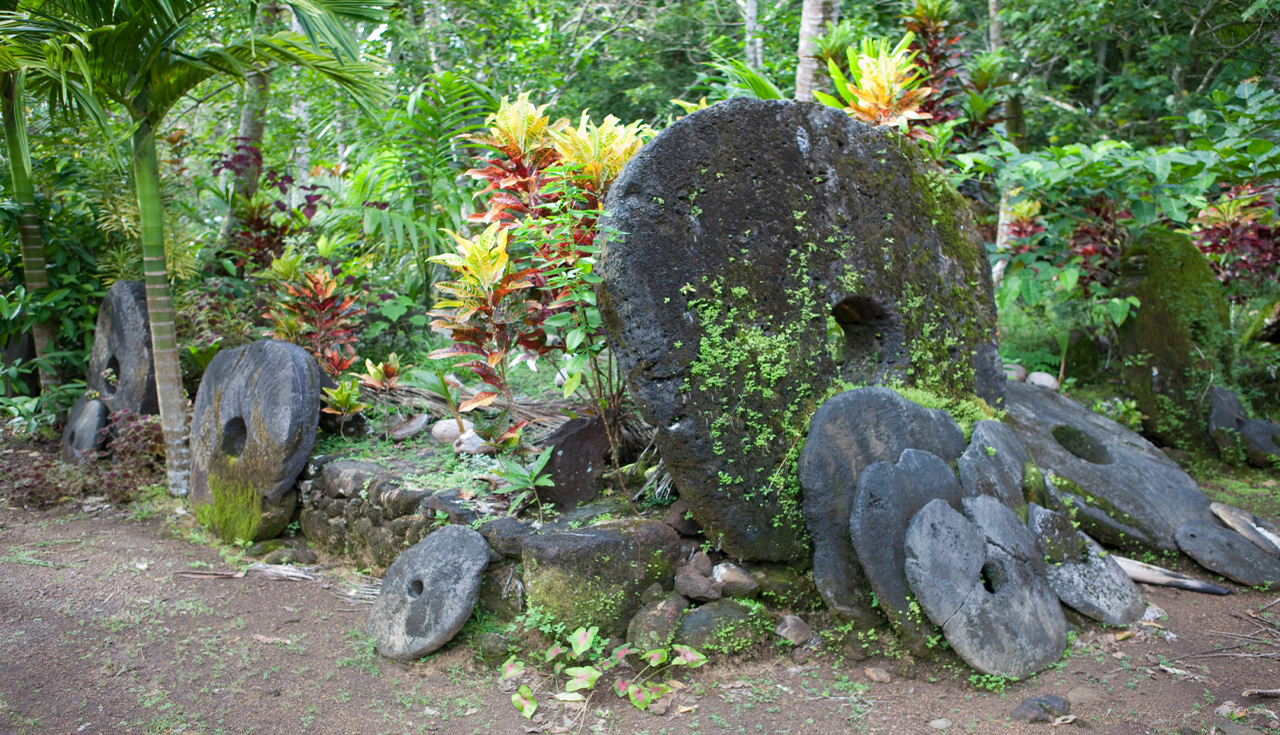
Most of the time, coins are little bits of metal jangling round at the bottom of your pockets, or something you find when you’re cleaning out the couch cushions. Their small size makes them easy to lose, but their typically low value means that it’s generally not a big deal when that happens.
For the Yap people in Micronesia, not so much. Their coins have enormous value, but they aren’t likely to get lost. Called rai stones, these coins are carved from limestone on the island of Palau (400km away) before being brought to Yap. The stones are valued by their size – they range from 7cm to 3.6m in diameter – as well as their ornateness and even for the sheer difficulty in obtaining the rock. How much a coin is worth also depends on who you give it to, and what for.
The stones are set up in a village, out where everyone can see them. So let’s say you want to buy something–how do you get your rai stone to its new owner? You don’t. Why would you need to? Everyone knows who it belongs to now, and that’s all that’s necessary, so it can stay exactly where it is.
There’s even a local story that as one stone was being brought to Yap, the boat ran into a storm and the rai stone ended up at the bottom of the sea. That didn’t make a bit of difference to the Yap, though. They all agreed that it was still perfectly good money, even if no one could see or touch it.
Although the ubiquitous US dollar has become common currency on Yap for most transactions, the rai stones are still used for matters of greater significance. You could even say that they carry a lot of weight in Yap society.