
1.2A
Now To The Nitty Gritty

Transforming Resources and Goals into Income – Not a Magic Spell
So you’ve thought about what kind of goals you have, what kind of resources you have available to you, and what kind of impact you can have on the world. That’s a lot. But let’s go to the next level.
How can you transform those things you’ve been thinking about into reality? Into…perhaps…MONEY?
Remember, bartering, or trading for goods & services, was around long before actual money. Bartering is still an option today. Let’s say you help your friend Connor clean out his yard; he doesn’t have any money to give you, but wants to thank you anyway, so he gives you a dozen of his ma’s incredible chocolate chip cookies. That’s bartering.
Some traditional ways for teens to get money is via an allowance from their parents, gifts from Gran on holidays or birthdays, or from doing odd jobs for someone else. But those aren’t the only options. Working for yourself is something that might sound daunting, but it can be surprisingly feasible.
 Let’s look at a couple potential examples of teens who are doing their own thing.
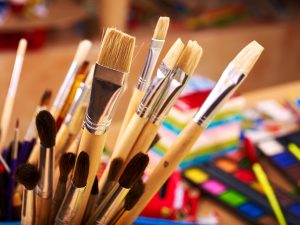
Michael loves to paint. He paints when he’s happy, when he’s stressed, whenever he has a free minute. He happily gives his paintings to family and friends, but he still has stacks of finished paintings in his room. When he’s not painting, he’s at the store, looking over the various brushes and tubes of paint, trying to decide which to get next. Unfortunately, painting supplies are pricey.
So to get enough money to buy his supplies, Michael sets up an Etsy store: Killarney Wild Water. He picks his best paintings, takes pictures of them, and lists them. The hardest part is figuring out how much to charge. He’s given so many paintings away for free because he loves doing it so much that charging for them feels odd, but it’s really a reasonable way to cover some of his cost of painting.
He looks as what similar items go for, and prices his in the same range. He sets up a Stripe or PayPal account so people can pay for his art online, and after not too long, sells his first painting. Maybe he’ll continue to the point of making this his full time job once he’s an adult, but maybe not. He might instead keep painting as a hobby that just sells enough to fund itself. 
Anna has always had a way with dogs. Her family has had at least one dog since she was a baby, and she’s helped take care of them since she could walk herself. When her neighbours went on holiday, they couldn’t take Jack, their terrier, along with them, so they gave Anna a key, and every day before school she would take Jack for a brisk walk along with her own pup. Once she got home, she would go back over and play with him for a bit, as well as give him dinner and out for another walk. Once the neighbours returned home, they saw what a good job she’d done, so kept her on, and recommended her to two of their neighbours. Now Anna looks after three dogs, and since she doesn’t need to buy a lot of supplies for her business (a new pair of trainers and a lot of plastic bags), she’s saved up enough money to buy a new laptop.
These all look like different situations, but you assess them more closely, you’ll see that they have a lot of similarities. These teens had goals, and considered the resources they had available. They also had to do something else: keep track of their expenses. Whether it’s watercolour paper or dog treats, they were spending money to help keep their business growing.
And they had to spend time as well. Time spent painting or walking any number of dogs is time that they didn’t have for studies, or friends, or even sleep. Finding that balance is a big part of a healthy lifestyle, and accounting for your time is a big part of managing your business.
Time figures in as a concrete factor in your expenses. How do you price your goods or services? If you spend time doing something, you not only need to be compensated for that time, but you also have to estimate your potential for income based on how much time it takes to make your product, so your prices can reflect the ‘production time’ as well as the materials cost. However, be warned: people who do not participate in your field may not understand why things cost what they do.
For example, if you knit adorable dragons and decide to sell them, you’ll likely encounter people who complain about the cost, grumpily reminding you that they could buy a soft toy at the shops for less than half what you’re charging. This is where you cheerfully remind them that your adorable handmade toy is unique and can’t be duplicated in a mass market situation.
At any rate, you do need to take into account how much your expenses are, including your time. Say a knitted dragon costs €3 to make; you need the yarn, of course, but you also need the knitting needles and the pattern, along with any embellishments you want to add. You decided to sell it for €5, so that’s a profit of €2.But what about your time? Knitting one dragon takes two hours. Is two hours of your time worth €2? You decide to sell them for €20, but then fewer people will buy them. Learning how to price your products so you maximize your profit without pricing yourself out of the game is an important skill to develop.
One of the most important financial habits you can have it keeping track of your money. It’s great to have money coming in, but if all you do is toss it in a drawer when you get it, you won’t know how much you’ve got at any given time, or even if there’s enough to buy something you need, and you’ll never really know if your pricing is correct.
Remember, income is any money you get, no matter what the source is: a part time job, Christmas money from Grandma, or dragon sales. Expenses are everything that you spend, whether it’s a bag of crisps from Spar while you’re on your way home from school, to a new telescope, to really good paint brushes, to dog treats.
You’ll want to split up your expenses into a two categories: Fixed and Variable.
“Fixed” and “Variable” may sound complicated, but they really aren’t.
If you pay the same amount every month for something, like your mobile bill or your rent or car payment, that’s a FIXED expense – you can count on it staying the same month after month. The expenses that change – like how much you spend on lunch or shopping, or unexpected expenses like replacing your mobile because you dropped it running for the Luas – are called VARIABLE. Get it? They VARY from month to month.
There are many choices for how to keep track of what you’re spending vs. how much you’re making, from the good old notebook to apps on your phone.
In another lesson, we’ll talk about different kinds of tools you can use to keep track of your money, as well as how they work.

1.2A | Wordsearch

1.2A | Ripple

1.2A | Reflection 1
1.2A | Reflection 2
1.2A | Reflection 3
1.2A | Reflection 4
Junior Cycle Business Studies Specifications
- Strand one: Personal Finance
- Element: Managing my resources
- 1.1 (Secondary) Review the personal resources available to them to realise their needs and wants and analyse the extent to which realising their needs and wants may impact on individuals and society
- 1.2 (Primary) Identify and classify sources of income and expenditure, compare options available to best manage financial resources, evaluating the risks associated with each option and making informed and responsible judgements
- Element: Managing my resources
Curriculum Elements of the 8 Key Skills of the Junior Cycle
- MANAGING MYSELF
- Knowing myself
- Making considered decisions
- Setting and achieving personal goals
- BEING CREATIVE
- Imagining
- Exploring options and alternatives
- MANAGING INFORMATION & THINKING
- Being curious
- Thinking creatively and critically